Insights
Soybean Commodity Trading: A Guide for Traders
Rasya Azkha
•
7 Minutes
read
•
Oct 19, 2026
As a widely used agricultural raw material, soybeans have commercial value beyond the crop itself. Processing produces soybean meal for animal feed and soybean oil for food and industrial uses, meaning demand across these downstream markets can affect the economics of soybean production, processing, and trade.
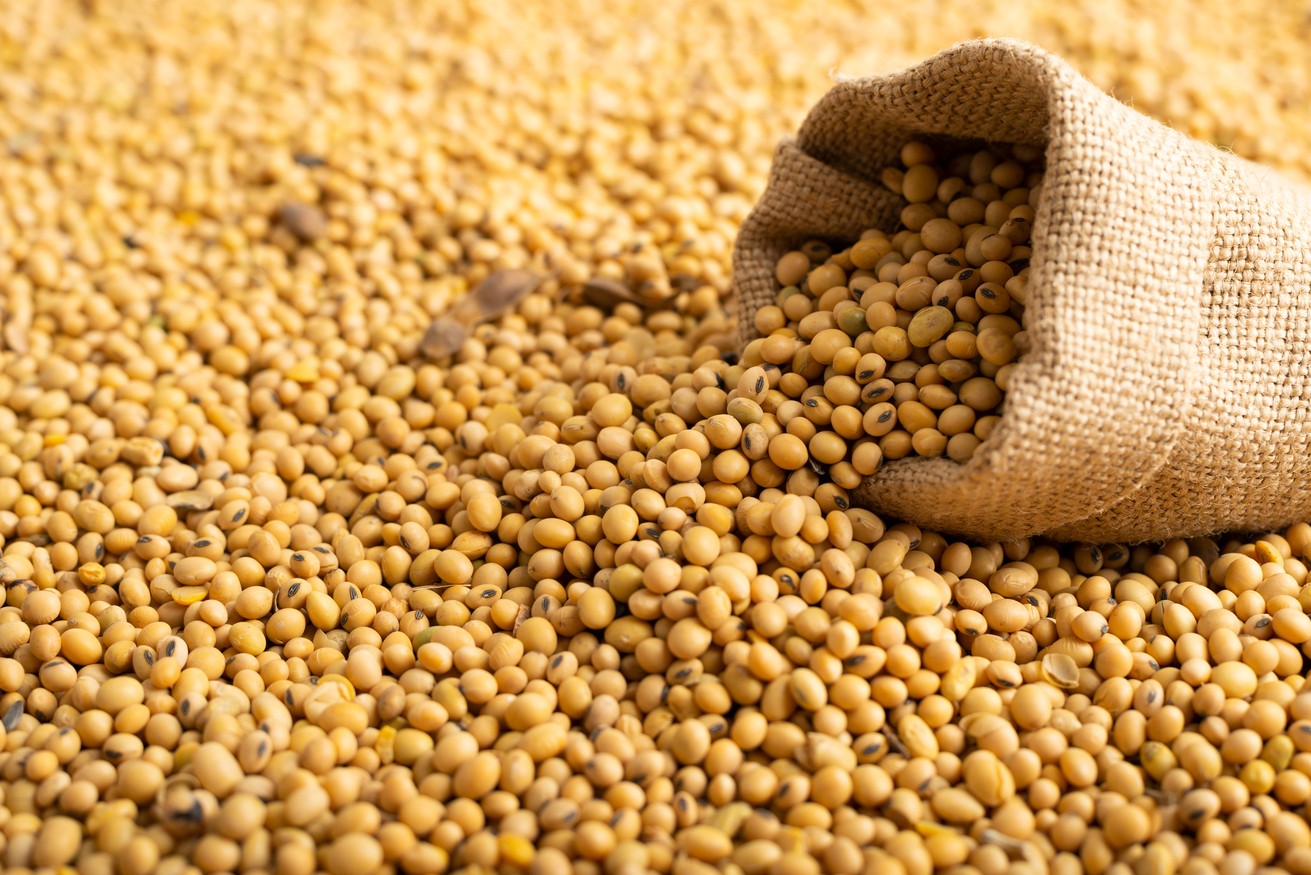
Soybean is one of the most actively traded agricultural commodities in the world, valued for its role in animal feed, cooking oil, and biodiesel. For financial professionals, commodity traders, and investors, understanding how soybean commodity trading works is essential to managing exposure to a market that is both highly liquid and highly volatile.
What is Soybean Commodity Trading?
Soybean commodity trading is the buying and selling of soybean, either as a physical product or through standardized contracts, with the aim of profiting from price movements or managing price risk.
Two broad approaches exist. In the physical or spot market, buyers and sellers exchange actual soybean for near term delivery, often through an organized exchange that matches producers with processors and traders. In the derivatives market, participants trade futures or forward contracts that reference the future price of soybean without necessarily taking physical delivery.
Producersand processors typically trade soybean to hedge, locking in a price today toprotect against unfavorable moves before harvest or before a shipment isprocessed. Traders and investors, on the other hand, often use soybeancontracts to speculate on price direction or to diversify a portfolio withexposure to agricultural commodities.
Because soybean underpins several major food andindustrial supply chains, its trading activity tends to be closely watched asan indicator of broader agricultural market conditions.
Read also: Soybean Oil vs Palm Oil Uses and Market Differences
Why Is Soybean an Important Global Commodity?
Soybean's importance comes from both its scale of production and the breadth of its uses. It is processed into soybean meal, a primary protein source in livestock feed, and soybean oil, which is used in cooking, food manufacturing, and increasingly in biodiesel production. This dual role in the food chain and the energy sector gives soybean demand that is more resilient than many single purpose crops.
On the supply side, production is concentrated in a small number of countries. The United States, Brazil, and Argentina together account for roughly four fifths of global soybean output, which means that weather and policy developments in these three countries have an outsized effect on global supply. On the demand side, China is by far the largest importer, absorbing a majority of soybean traded internationally to support its livestock and food processing industries. This concentration on both ends of the supply chain is a key reason soybean is treated as a benchmark agricultural commodity by traders and analysts worldwide.
What Factors Affect Soybean Prices?
Soybean prices are driven primarily by the balance of global supply and demand, but several specific factors tend to cause the sharpest price swings. Weather is often the single biggest driver: droughts, excess rainfall, or unfavorable temperatures during the planting and growing seasons in the US, Brazil, or Argentina can quickly tighten expected supply and push prices higher. Because the US and South American growing seasons fall in opposite halves of the year, the market effectively never has an "off season" for weather risk.
Currency movements also matter, since soybean is priced internationally in US dollars: a weaker dollar tends to make soybean cheaper for foreign buyers and can support prices, while a stronger dollar has the opposite effect. Government policy, including export restrictions, import tariffs, and biofuel mandates that increase demand for soybean oil, can shift trade flows quickly.
Finally, demand from major importers, particularly China, along with routine data such as planting progress, harvest estimates, and government supply-and-demand reports, gives the market fresh signals that traders use to reprice soybean on an ongoing basis.
How Soybean Contracts Work in Commodity Trading
On a commodity exchange, soybean is typically traded through standardized contracts that specify the quantity, quality grade, delivery period, and settlement terms of the underlying soybean, allowing a contract bought by one trader to be reliably matched against a contract sold by another without individual negotiation.
Contracts can be settled in two main ways. Physically settled contracts require the seller to deliver, and the buyer to take, the actual soybean specified, usually through a bonded warehouse or an approved delivery point. Cash settled contracts are closed out based on the difference between the contract price and the market price at expiry, with no physical soybean changing hands.
Regardless of settlement type, a clearing house typically sits between buyers and sellers, guaranteeing performance on both sides of every trade and collecting margin to protect the market against the risk that a participant fails to honor its obligations.
Upcoming Agriculture Contract at ACM Exchange
Soybeans are one of the world’s major agricultural commodities, with demand influenced by food production, animal feed, and global trade. As part of its expanding agricultural commodity offering, ACM Exchange is preparing to introduce an upcoming Agriculture Contract, providing market participants with a standardized way to access and manage exposure to soybean prices. Stay tuned for further details on the contract specifications, trading mechanism, and availability at ACM Exchange.
Key Takeaway
Soybean's central role in global food and energy supply chains, combined with its sensitivity to weather, currency, and policy shifts, makes it one of the more dynamic commodities available to trade. Understanding the fundamentals of soybean commodity trading and how contracts are structured on a regulated exchange is the first step toward participating in this market with discipline and confidence.