Insights
Precious Metals Investment in Southeast Asia: Why It Matters
Arta Anindita
•
8 Minutes
read
•
Aug 5, 2026
Southeast Asia precious metals market continues to develop alongside broader economic growth and expanding investment opportunities. Understanding regional trends, market participation, and the characteristics of gold, silver, and platinum provides valuable context for evaluating precious metals investment within the region.
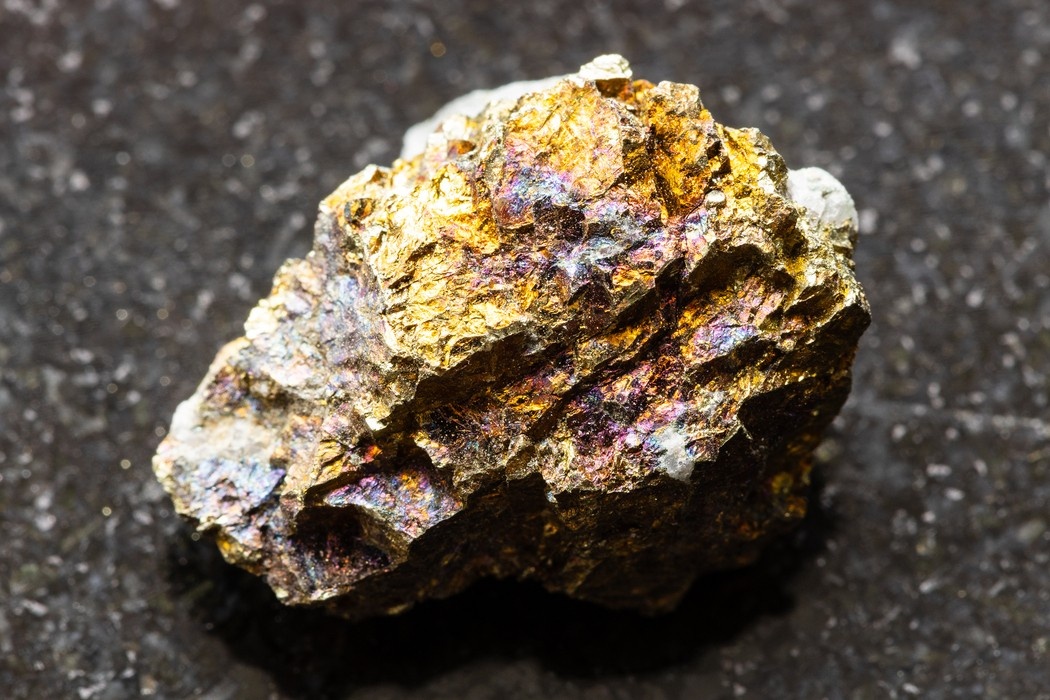
According to world gold council, in the first quarter of 2026, central banks in Indonesia and Malaysia bought gold for the first time in their institutional history, part of a wider wave of new sovereign buyers that also included Cambodia. For portfolio managers and allocators tracking Southeast Asia, that's a more telling signal than another retail gold buying headline: it means some of the region's most risk averse balance sheets are now treating bullion as a strategic holding, not just a hedge of last resort.
Unlike equities or fixed income, gold and silver carry no counterparty risk and pay no yield and that absence of yield is exactly what makes them behave differently inside a portfolio. That low correlation, more than any promise of outsized returns, is why institutional allocators keep returning to precious metals when currency pressure, inflation, and policy uncertainty build up across the region. Past performance is, of course, no guarantee of future results.
Why Precious Metals Investment in Southeast Asia Matters
Southeast Asia is one of the world's fastest growing economic regions, but growth also comes with challenges. Inflation, geopolitical tensions, and currency depreciation can impact investment returns.
Gold has become increasingly attractive because it is:
- A hedge against inflation
- A store of value during market uncertainty
- Less correlated with stocks and bonds
- Easily recognized and traded across global markets
- Increasingly backed by institutional grade market infrastructure across the region
For institutional allocators, the case is often framed around real yields, the return on government bonds after subtracting inflation. When the Consumer Price Index runs hot and nominal yields don't keep pace, real yields fall, and the opportunity cost of holding a zero-yield asset like gold shrinks. That relationship is one reason commodities are increasingly used as a tactical portfolio allocation rather than a permanent core holding, a way to lean into inflation risk when the macro data calls for it, and scale back when it doesn't.
The World Gold Council's Q2 2026 Gold Demand Trends report shows why these matters at scale: central banks added 289 tonnes to global reserves that quarter alone, and the Council expects investment, increasingly driven by over the counter activity and Asian buying to remain the main driver of gold demand through the second half of 2026. First half 2026 demand reached a record US$380 billion in value, even as the gold price eased back from January highs.
Read also: Why Gold is Valuable: Key Reasons Gold Remains Important
Indonesia: From Retail Habit to Strategic Allocation
Indonesia's gold bar and coin demand jumped 40% year on year in the second quarter of 2026, reaching roughly 15 tonnes, one of the strongest showings of any gold investment market globally, according to World Gold Council data. The increase came even as global gold prices retreated from January's record highs, which is itself notable: buying that holds up while prices fall usually signals conviction rather than momentum chasing.
Several factors continue to drive demand:
- Rupiah depreciation against major currencies
- Inflation concerns
- Growing awareness of portfolio diversification
- Easier access through digital investment platforms
- A shift toward gold as a long term strategic asset rather than a short term trade
World Gold Council analysts covering the region point to a behavioral shift behind the numbers: rather than reacting to short-term price swings, more Indonesian investors, as this year's central bank purchases show, more Indonesian institutions, appear to be treating gold as a long term strategic holding tied to a weaker rupiah and an uncertain domestic growth outlook. Indonesia was, notably, among the first-time sovereign gold buyers recorded in the Council's Q1 2026 report.
Vietnam: A Market in Transition
Vietnam has one of the strongest traditions of gold ownership in Asia. Gold is widely viewed as a reliable store of wealth for families and long term investors.
For years, that demand ran into a structural bottleneck, government restrictions on gold bar imports kept domestic SJC bar prices trading 12–20% above the international spot price, a gap that widened to as much as VND 15–20 million per tael during 2024–2025. That's now changing. Since mid 2024, Vietnam has authorized major state banks including Vietcombank, VietinBank, BIDV, and Agribank to sell SJC gold bars directly, and by early 2026 the domestic international price gap had begun narrowing meaningfully, even as both local and global gold prices pushed to fresh records.
None of that has slowed underlying demand. Vietnam's relationship with gold has never really been about price, it's about a trust in the metal that's outlasted currency devaluations, banking crises, and now, a genuine policy reform cycle.
Singapore: Building the Region Institutional Gold Infrastructure
Indonesia and Vietnam tell a demand-side story. Singapore is building the supply-side infrastructure to match it.
In March 2026, the Monetary Authority of Singapore and the Singapore Bullion Market Association set out a plan to strengthen the city state position as a trusted gold trading centre for the Asia Pacific region covering physical vaulting, capital markets products, over the counter clearing, and central bank storage services. The Singapore Exchange is expected to launch an OTC clearing platform for Loco-Singapore gold by the end of 2026, backed by clearing members including DBS, OCBC, UOB, Deutsche Bank, ICBC Standard Bank, and J.P. Morgan. MAS is also set to begin offering gold-vaulting services to foreign central banks starting in October 2026.
Unlike Indonesia's and Vietnam's largely domestic, retail-adjacent markets, Singapore's build-out is explicitly institutional: the initiative targets central banks and family offices seeking politically neutral, well regulated storage and trading infrastructure, not retail accessibility. For institutional and B2B investors evaluating exposure to the region, that combination also sovereign demand growth in Indonesia and Vietnam, paired with institutional grade infrastructure in Singapore is what makes Southeast Asia's precious metals story more than a currency hedge narrative.
Why This Matters for Institutional Portfolios
Precious metals earn their place in institutional portfolios for a narrower set of reasons than the retail pitch usually suggests and for allocators, the specifics matter more than the general case.
1. Protection Against Inflation
As covered above, this is really a real yield story more than a simple inflation story, gold tends to do its best work when inflation runs ahead of nominal interest rates, not merely when inflation is high in isolation.
2. Portfolio Diversification
Academic research on commodities as an asset class generally supports a tactical rather than permanent allocation, the sized and adjusted with the macro regime, rather than held as a fixed core position. Gold's low correlation to equities and bonds is the mechanism; a widely cited institutional benchmark is a range of roughly 5–15% of a dollar denominated portfolio, though the right figure depends entirely on mandate and risk tolerance.
3. Global Liquidity
This is precisely the gap Singapore's new OTC clearing infrastructure is designed to close for institutional-size trades. Liquidity still varies by metal and vehicle for how gold, silver, and platinum compare on that front.
Risks Investors Should Consider
Although precious metals offer several advantages, they should not be viewed as risk free investments.
Potential drawbacks include:
- Prices can fluctuate significantly in the short term.
- Gold does not generate dividends or interest.
- Physical storage and insurance may increase costs.
- Returns may underperform equities during strong economic expansions.
For these reasons, precious metals are commonly used as one component of a diversified investment portfolio rather than as the sole investment.
Is Silver Worth Considering?
While gold receives most of the attention, silver also deserves consideration.
Silver has both industrial and investment demand, particularly in renewable energy, electronics, and manufacturing. Because of its industrial applications, silver prices may be more volatile than gold, but they can also benefit from increasing technological demand.
Investors seeking higher growth potential often allocate a smaller portion of their precious metals portfolio to silver while maintaining gold as their primary defensive asset.
Read also: Precious Metal Allocation: Gold vs Silver vs Platinum
Conclusion
Southeast Asia's precious metals story in 2026 isn't just a currency weakness narrative anymore. Indonesia's institutions and retail investors alike are treating gold as a strategic holding. Vietnam's market is working through a genuine structural reform. Singapore is building institutional infrastructure that didn't exist eighteen months ago. Together, those three threads point to a region that's professionalizing its access to precious metals markets, not just consuming more of them.
For institutional and B2B investors evaluating where precious metals fit in a broader allocation, the practical questions are less about whether to hold gold and silver, and more about how much, through which vehicle, and in which jurisdiction. Our allocation guide breaks that down further, or reach out to our team directly to discuss what regulated market access in Southeast Asia looks like for your portfolio.