Insights
Indonesia Agricultural Exports in Global Markets
Dresyamaya Fiona
•
7 Minutes
read
•
Sep 22, 2026
Agricultural exports are an important link between Indonesia’s domestic farming and production sectors and international commodity markets. Different products have distinct production cycles, end uses, trade routes, and demand conditions that shape their role in global trade.
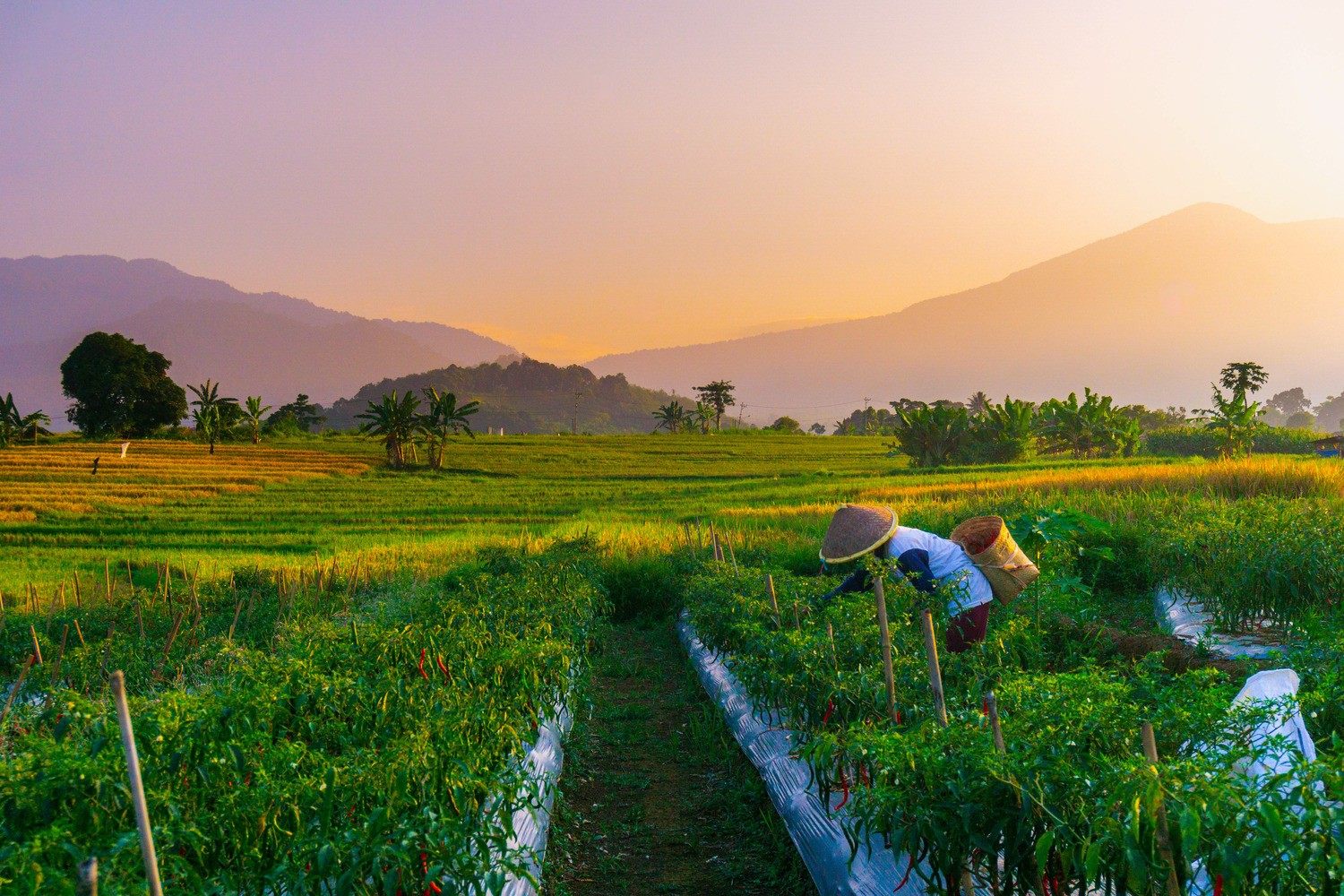
Indonesia is one of the world’s major agricultural producers, supported by its tropical climate, fertile land, and diverse natural resources. From coffee and spices to palm oil, cocoa, fruits, and other plantation commodities, the country produces a wide range of agricultural products for both domestic consumption and international markets.
As global demand for food and agricultural commodities continues to evolve, Indonesia agricultural exports are gaining greater attention. In 2025, Indonesia’s agricultural sector recorded the highest export growth among Indonesia’s major economic sectors, increasing by 21.01% year on year according to Ministry of Trade of the Republic of Indonesia (Ministry of Trade). Agriculture accounted for 2.43% of Indonesia’s total exports during the year.
Key Commodities in Indonesia Agricultural Exports
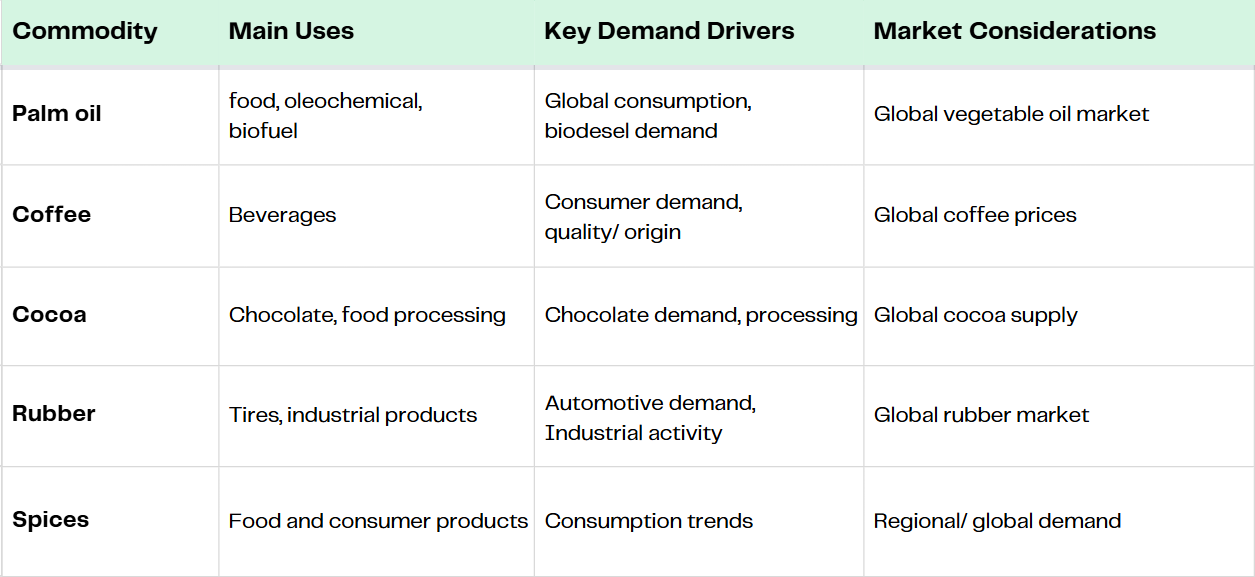
Indonesia has a diverse agricultural export portfolio. Coffee, palm oil and other vegetable oils, spices, cocoa, tea, fruits, and seafood are among the products contributing to the country's international trade.
Coffee remains one of Indonesia’s best known agricultural commodities. Indonesian coffee is produced across several regions, with differences in altitude, climate, and soil contributing to a variety of flavor profiles. This diversity has helped Indonesian coffee establish a presence in international markets.
Spices are another important category. Indonesia has a long history as a producer of spices such as pepper, cloves, nutmeg, and cinnamon. These commodities continue to serve international markets, particularly the food, beverage, and manufacturing industries.
Vegetable oils are also an important part of Indonesia’s agricultural trade. According to Indonesia’s Ministry of Trade, fats and oils derived from commodities such as crude palm oil (CPO) and coconut oil are among the country’s leading agricultural export products. Other important products include coffee, tea, cocoa, seafood, and processed food products.
Read also: How Commodity Import Costs Affect Businesses
The Outlook for Indonesia Agricultural Exports
The outlook for Indonesia agricultural exports remains promising as global demand for food and agricultural commodities continues to develop.
Indonesia’s overall export performance was also strong in 2025. According to Statistics Indonesia (BPS), total exports reached US$282.91 billion, increasing 5.99% compared with 2024. Non-oil and gas exports reached US$269.84 billion, while Indonesia recorded a trade surplus of US$41.05 billion.
The agricultural sector's 21.01% growth in 2025 further highlights its potential within Indonesia's export structure.
However, long-term growth will depend on more than increasing production. Infrastructure, logistics, product quality, technology, market access, and the ability to respond to global commodity price movements will all play important roles.
For traders and investors, Indonesia’s agricultural sector is therefore worth watching. Changes in production, weather patterns, consumer demand, government policies, and international trade flows can influence the supply and pricing of agricultural commodities globally.
Ultimately, Indonesia’s competitive advantage lies not only in the diversity of commodities it can produce, but also in its ability to transform these resources into competitive, higher-value products for international markets. With continued investment and improvements across the agricultural supply chain, Indonesia agricultural exports can play an increasingly important role in connecting the country’s producers with the global commodity market.
What is Driving Indonesia Agricultural Exports?
Several factors are supporting the development of Indonesia’s agricultural exports.
First, global demand for food and agricultural commodities continues to create opportunities for producing countries. Population growth, urbanization, and changing consumer preferences are influencing demand for food products, beverages, and agricultural raw materials.
Indonesia’s geographical diversity is another advantage. Different regions support different crops, allowing the country to maintain a broad agricultural production base.
International trade agreements can also support export growth by improving market access. The Ministry of Trade has highlighted the importance of bilateral and multilateral trade agreements in expanding export markets, improving competitiveness, and encouraging innovation across Indonesia’s agricultural sector.
Despite its potential, Indonesia agricultural exports face several challenges.
One of the most important is meeting international quality and food-safety standards. Exporters must comply with requirements that can vary between destination markets, including standards related to product quality, packaging, certification, traceability, and food safety.
Weather and climate conditions are another major consideration. Agricultural production depends heavily on rainfall, temperature, and other environmental factors. Extreme weather can affect crop yields, reduce supply, and influence commodity prices.
Global price volatility can also create uncertainty for producers and exporters. Agricultural commodity prices can change in response to weather disruptions, supply-demand imbalances, geopolitical developments, currency movements, and changes in trade policies.
For market participants, understanding these factors is therefore increasingly important when assessing agricultural commodity markets.
Moving Toward Higher Value Agricultural Products
One opportunity for Indonesia is to increase the value of its agricultural exports through processing and product diversification.
Rather than exporting commodities exclusively in raw form, producers can develop processed or finished products that capture greater value. Coffee, for example, can be exported as roasted coffee or other processed products instead of green coffee beans alone. Similarly, cocoa, coconut, and other plantation commodities can be processed into products with broader commercial applications.
Value added exports can potentially increase export earnings while creating opportunities across processing, packaging, logistics, and distribution.
Technology can also play an important role. Improvements in farming techniques, supply-chain management, storage, and traceability can help producers improve efficiency and meet increasingly demanding international standards.
Indonesia Agricultural Exports and the Global Commodity Market
The growth of agricultural exports also creates a connection between Indonesian producers and global commodity markets.
Changes in Indonesia’s agricultural production can influence international supply, particularly for commodities where Indonesia is a significant producer or exporter. At the same time, international prices can affect the revenues received by producers and exporters.
This relationship makes agricultural commodities an important area to monitor for businesses, traders, and investors. Factors such as weather conditions, harvest forecasts, inventory levels, global demand, trade policies, and currency movements can all contribute to changes in commodity prices.
For example, Indonesia’s agricultural export performance can provide useful insight into broader trends in commodity supply and international trade flows.
Read also: How Population Growth Drives Agriculture Commodity Demand