Insights
Why Indonesia’s Commodity Market Gaining Global Attention
Rasya Azkha
•
8 Minutes
read
•
Aug 10, 2026
The Indonesian commodity market is supported by the country’s diverse natural resources and its position as a major producer of several globally traded commodities. Market activity is influenced by production levels, export flows, global demand, and developments in trading infrastructure.
Indonesia has supplied raw materials to global manufacturing for decades, yet Indonesia commodity market is attracting a different kind of attention today. Export scale across nickel, coal, and palm oil now sits alongside a maturing policy agenda and accelerating demand for energy transition minerals. As international participation deepens, so does the requirement for transparent price discovery and regulated trading venues. This article examines the forces reshaping how global investors assess Indonesian commodities, and what that shift asks of market infrastructure.
Indonesia’s Growing Role in Global Commodity Trade
Indonesia ranks among the world’s largest commodity producers, with a resource base spanning energy and metals. It is the leading global producer of nickel and palm oil, a principal exporter of thermal coal, and a significant supplier of tin, copper, gold, and natural rubber. Indonesia holds roughly 42 percent of global nickel reserves and the second largest tin reserves worldwide, giving it structural rather than cyclical importance within several supply chains.
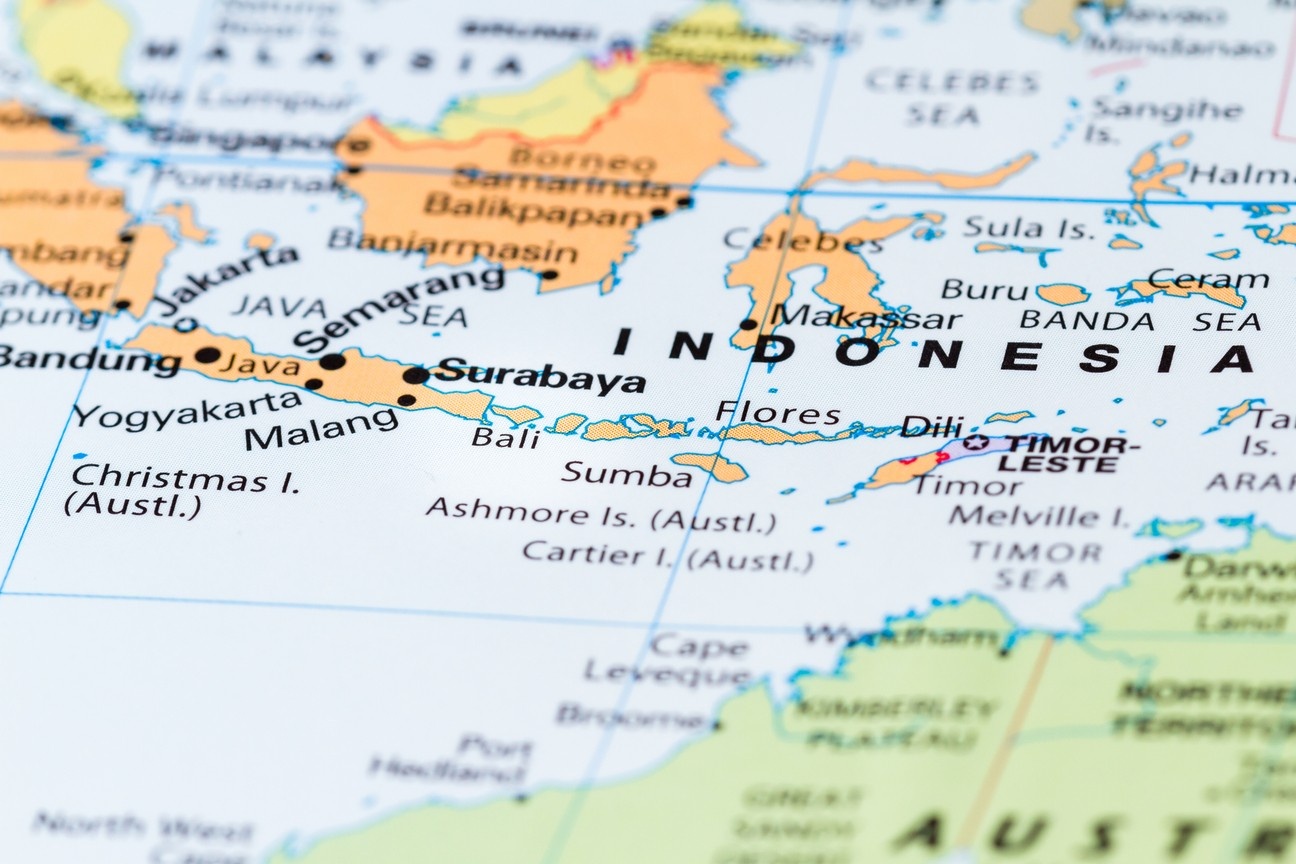
Geography reinforces this role. Situated between the Indian and Pacific Oceans and adjacent to the Strait of Malacca, Indonesia sits along the shipping lanes connecting Middle Eastern energy suppliers with East Asian manufacturing centers. Proximity to the region’s largest consuming markets shortens freight routes and embeds Indonesian output within Asian industrial supply chains.
Read also: How ACM Fits in Commodity Exchanges
How Indonesia’s G20 Presidency Strengthened Trade Confidence
Indonesia held the G20 presidency in 2022, concluding with the Bali Summit in November under the theme Recover Together, Recover Stronger. The agenda centered on global health architecture, digital transformation, and sustainable energy transition.
For Indonesia commodity markets, the significance lay less in specific outcomes than in signalling. Chairing the forum placed Indonesia in a convening role among the world’s major economies. Investment perception shifted accordingly, reinforcing a view of Indonesia as a stable counterparty rather than a purely resource dependent economy.
The presidency also clarified policy direction. By linking energy transition to industrial development, Indonesia indicated that resource wealth would be pursued through domestic processing and long-term industrialization rather than extraction alone. That consistency carries weight for investors assessing multi-year exposure.
Why Global Investors are Re-Rating Indonesian Commodity
The energy transition has changed which commodities matter. International Energy Agency analysis consistently identifies critical minerals as a structural constraint on clean energy deployment, with demand for battery and grid materials rising ahead of the supply response. Indonesia holds meaningful positions in several of them.
Nickel underpins electric vehicle battery chemistries. Copper carries the electrification of grids, transport, and renewable generation. Silver is essential to photovoltaic cells, while gold retains its role as a reserve and portfolio asset. Exposure to Indonesian production is therefore exposure to the inputs of the transition itself, not only to traditional industrial demand.
Supply chain diversification adds a second driver. Concentration in refining and processing has prompted manufacturers and governments to seek alternative sources, and Indonesian scale offers one.
Domestic policy is the third. Since the raw nickel ore export ban took effect in January 2020, Indonesia has pursued down streaming, known locally as hilirisasi, requiring processing within its borders. The effect has been to move the country up the value chain, exporting intermediate and refined products rather than ore.
What this Means for Institutional Commodity Investors
Institutional participants operate under requirements that differ from those of individual traders. They need transparency in pricing, sufficient liquidity to establish and exit positions, reliable price discovery, standardized contract terms, and a regulated venue where those conditions are enforced.
Commodity exchanges exist to provide this structure. By centralizing order flow, an exchange produces prices that reflect aggregate supply and demand rather than bilateral negotiation. Regulation supplies the enforcement layer through oversight of member conduct, position monitoring, and settlement discipline, allowing participants to transact without assessing each counterparty individually. Standardization completes the framework: when contract size, quality, and settlement terms are fixed, price remains the only variable.
Access to regulated trading venues becomes more consequential as institutional interest in the Indonesia commodity market grows. Within this structure, ACM Mercantile Exchange operates under BAPPEBTI’s regulatory framework, listing standardized nano derivative contracts intended to broaden participation while maintaining market integrity.
Read also: Precious Metals Investment in Southeast Asia: Why It Matters
Conclusion
Indonesia’s prominence in global commodity trade rests on more than resource endowment. Export scale, policy continuity, and a central position in energy transition supply chains have together altered how international investors assess the market. As participation broadens, the infrastructure supporting it, including regulated exchanges, standardized contracts, and transparent price discovery, becomes more important. Trading in ACM’s commodity products is conducted through the exchange’s registered members. A complete list of authorized members is published on the ACM website.